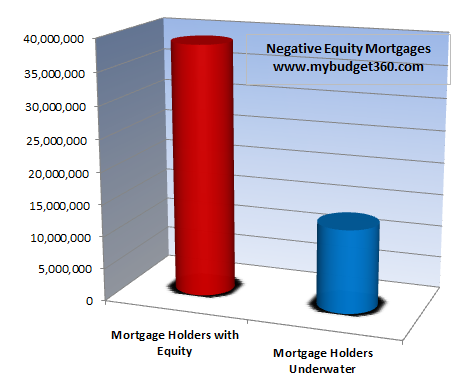
I'm not quite so optimistic as him, especially about housing when a quarter of U.S. homes are still underwater: that's just psychological ballast on consumption and investment. Then again, Americans have short memories and may resume their free-spending ways again even if they cannot afford it, to every economist's delight.
Now I know all my dear Republican friends will want to take issue with the following rosy analysis, but they should remember: no rooting against the home team! Your psychic energy makes all the difference.
By Fareed Zakaria
October 25, 2012 | Washington Post
The International Monetary Fund’s latest World Economic Outlook makes for gloomy reading. Growth projections have been revised downward almost everywhere, especially in Europe and the big emerging markets such as China. And yet, when looking out over the next four years — the next presidential term — the IMF projects that the United States will be the strongest of the world’s rich economies. U.S. growth is forecast to average 3 percent, much stronger than that of Germany or France (1.2 percent) or even Canada (2.3 percent). Increasingly, the evidence suggests that the United States has come out of the financial crisis of 2008 in better shape than its peers — because of the actions of its government.
Perhaps the most important cause of America’s relative health is the Federal Reserve. Ben Bernanke understood the depths of the problem early and responded energetically and creatively. The clearest vindication of his actions has been that the European Central Bank, after charting the opposite course for three years with disastrous results, has adopted policies similar to the Fed’s — and averted a potential Lehman-like collapse in Europe. (Mitt Romney’s two most prominent academic advisers, Glenn Hubbard and Gregory Mankiw, seem to recognize this, but Romney apparently doesn’t. As recently as August the Republican presidential nominee repeated his criticisms of the Fed and promised to replace Bernanke at its helm.)
In addition to providing general liquidity, the Fed and the Treasury rescued the financial system but also forced it, through stress tests and new rules, to reform. The result is that U.S. banks are in much better shape than their European counterparts. Consumers have also been paying off debt, thanks to a series of tax cuts and other forms of relief.
A McKinsey & Co. study of crises in recent decades found that the United States is mirroring the pattern of countries with the strongest recoveries. It noted that “Debt in the financial sector relative to GDP has fallen back to levels last seen in 2000, before the credit bubble. US households have reduced their debt relative to disposable income by 15 percentage points, more than in any other country; at this rate, they could reach sustainable debt levels in two years or so.”
Kenneth Rogoff and Carmen Reinhart, the leading experts on financial crises, argue that the United States is performing better than most countries in similar circumstances. U.S. consumer confidence is at its highest levels since September 2007.
Every recovery since World War II has been led by housing, except this one. But finally, housing is back. Two weeks ago, Jamie Dimon, the chief executive of JPMorgan Chase, declared that housing had turned the corner and predicted that, as a consequence, economic growth in 2013 would be so strong the Fed would have to raise interest rates. Given his firm’s vast mortgage portfolio, Dimon has a unique perspective on housing, and he is a smart man who knows that the Fed has promised to keep rates flat for three years. Last week, data on new housing starts confirmed Dimon’s optimism.
U.S. corporations have also bounced back. Corporate profits are at an all-time high as a percentage of gross domestic product, and companies have $1.7 trillion in cash on their balance sheets. The key to long-term recoveries from recessions is reform and restructuring, and U.S. businesses have been quick to respond.
Government intervention assisted this process with banks, auto companies and even in housing. Romney is correct to point out that the Obama administration supervised a managed bankruptcy in Detroit — forcing the kind of reform a private equity firm would have (though, crucially, providing the cash that a President Romney would not have). The Economist magazine, which initially opposed that bailout, reversed itself because of the manner in which General Motors and Chrysler were made to cut costs and become competitive.
And then there is America’s energy revolution, which is also bringing back manufacturing. U.S. exports, which have climbed 45 percent in the past four years, are at their highest level ever as a percentage of GDP.
All these good signs come with caveats. Europe continues to weaken. The fiscal cliff looms ominously. But the fact remains, compared with the rest of the industrialized world and the arc of previous post-bubble recoveries, the United States is ready for a robust revival. This is partly because of the dynamism of the U.S. economy but also because of the timely and intelligent actions of the Fed and the Obama administration.
The next president will reap the rewards of work already done. So it would be the ultimate irony if, having strongly criticized almost every measure that contributed to these positive tends, Mitt Romney ends up presiding over what he would surely call “the Romney recovery.”